Kitting is the practice of gathering all the separate items needed for a job and packaging them together as one unit before the work starts. In a factory, that unit is a kit of components for a specific assembly or work order. In a warehouse, it is often a group of products packed and sold together under a single SKU. The idea is the same in both cases: do the searching and counting once, in advance, so the next step can move without interruption.
This article explains what kitting is, how kitting in manufacturing works, and when it pays off.
What is kitting?
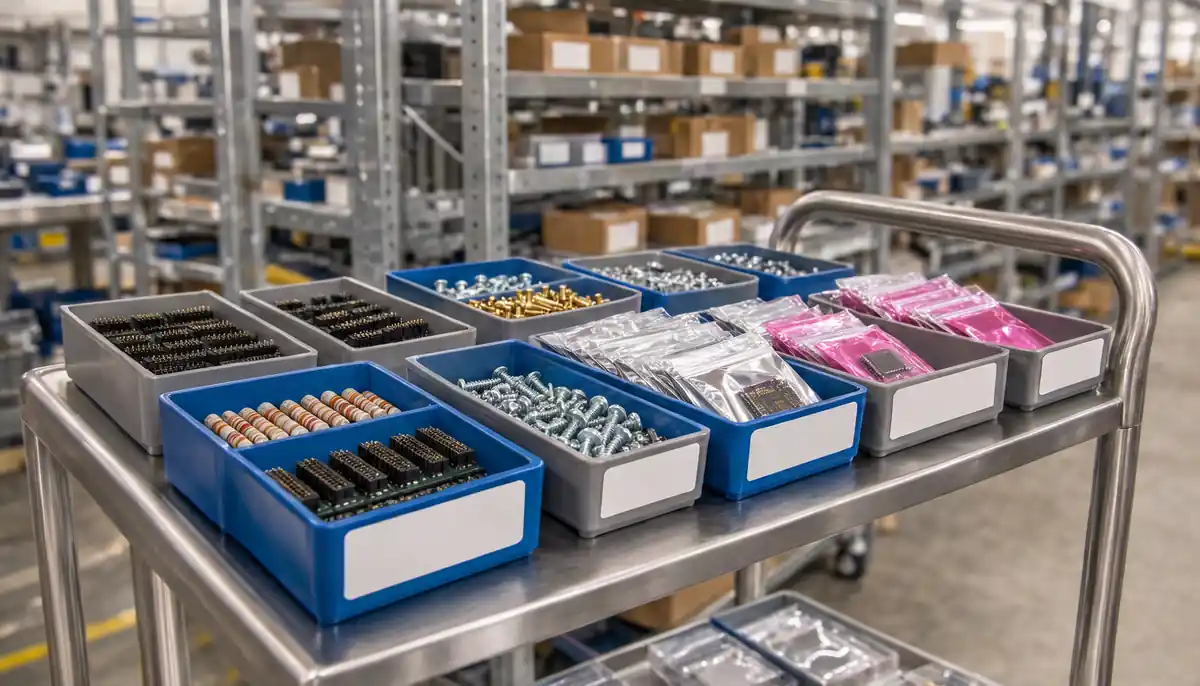
A kit is a set of parts or products assigned to one purpose and handled as a single item. Each kit has a defined list of contents, a quantity for each item, and an identifier so it can be tracked. Kitting is the process of building those kits: picking each item, checking it, bagging or placing it in a tray or tote, labeling the kit, and delivering it where it is needed.
Kitting is not the same as assembly. The items in a kit stay separate. Assembly comes later, when an operator or a machine turns those parts into a finished product.
Kitting in manufacturing
In production, a kit usually matches one work order or one batch of an assembly. The bill of materials (BOM) defines what goes into it. Instead of keeping every part at every workstation, the plant prepares a kit with exactly what that order needs and sends it to the line when the work is scheduled.
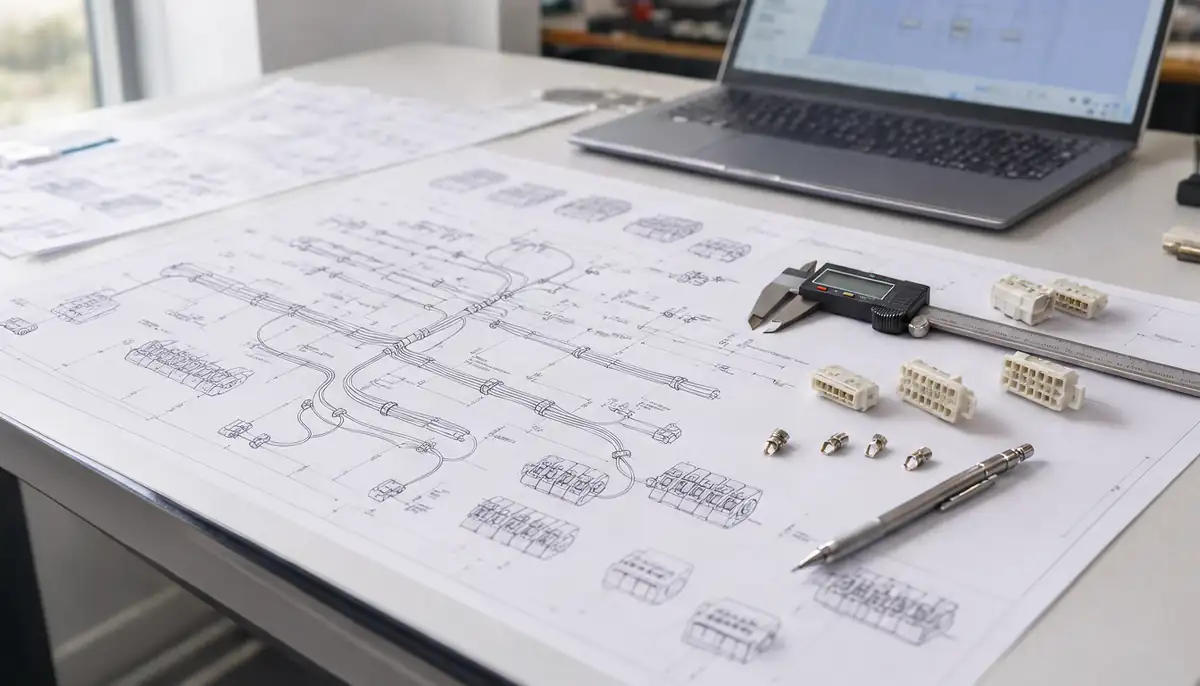
It is common in electronics, wire harness, and mechanical assembly, where a single product can use dozens or hundreds of different part numbers. Kitting is a standard step in many electronics manufacturing services programs, where boards, cables, hardware, and enclosures for each build are prepared together.
How the kitting process works
Most kitting operations follow the same sequence:
- Release the order. The planning system generates a pick list from the BOM and the order quantity.
- Pick the parts. Each item is pulled from stock and counted, weighed, or scanned.
- Verify the kit. A second check, often by barcode, confirms part numbers and quantities match the list.
- Package and label. Parts go into bags, trays, or totes, and the kit is labeled with the order number and contents.
- Stage and deliver. The kit waits in a staging area and is sent to the line when production is ready.
Shortages show up during picking, before the line has started. That gives purchasing time to react instead of leaving an assembly half finished on the bench.
Benefits of kitting
Operators spend their time building instead of walking to shelves or searching bins. Because each kit holds exactly what one order needs, missing or extra parts are easy to spot, and inventory counts stay more accurate. A kit labeled with the order number also creates a clear link between the parts used and the units built, which helps with traceability in regulated or high-reliability products.
Kitting also makes it easier to change from one product to another on the same line. The next kit arrives with everything for the next job, and the previous parts leave with the finished order.
Drawbacks to keep in mind
Kitting adds a handling step. Parts are picked, packed, and moved before they are used, and that labor has a cost. Kits also need staging space, and an incomplete kit can hold up a whole order if the plant waits for one missing part. For very high-volume products that run on the same line every day, stocking parts at the line with a replenishment system such as kanban is often more efficient.
Kitting vs. line-side stocking
| Kitting | Line-side stocking | |
|---|---|---|
| Best fit | High mix, lower volume, many part numbers | Low mix, high volume, repeat production |
| Parts at the workstation | Only what the current order needs | A running supply of each part |
| Shortage detection | Before production starts | When a bin runs empty |
| Traceability | Easy to link parts to an order | Harder without extra tracking |
| Extra handling | Yes, picking and packing | Minimal |
Kitting in warehousing and fulfillment
Outside the factory, kitting usually means combining several finished products into one package: a starter set, a gift box, or a replacement parts pack. The warehouse treats the kit as its own SKU. Many companies hand this work to the same partner that builds or stores their products, since the parts are already in one place.
When kitting makes sense
Kitting tends to pay off when products have long bills of materials, when production switches often between models, when parts are small and easy to mix up, or when the customer requires traceability by lot or serial number. It is also useful when production is outsourced, because the kit gives both sides a clear record of what was supplied for each order. Companies that work with a contract manufacturing partner often agree on kitting rules as part of the production setup.
Frequently asked questions
What is the difference between kitting and assembly?
Kitting groups separate parts together without joining them. Assembly connects those parts into a finished product or subassembly. Kitting usually comes first and feeds the assembly step.
What is the difference between kitting and bundling?
The terms overlap. Bundling usually refers to selling several products together at one price. Kitting is the physical work of picking and packing those items into a single unit, whether for sale or for production.
Who usually does the kitting in a manufacturing program?
It depends on who owns the materials. When a manufacturer buys the components, it normally kits them in house. When the customer supplies some or all of the parts, the two sides agree on how parts are received, counted, and kitted before production.